
Ingredients
Equipment
Method
- Heat oven to 400°F (or 375°F convection)
- Cut the squash: wash, then carefully cut crosswise across the middle. For longer strands, cut across the equator. For shorter strands, cut from pole to pole.
- Scoop out the seeds and the stringy part in the middle. You likely won't get all the stringy part, but do your best to get all the seeds.
- Season lightly: brush the cut sides with your melted butter or olive oil, add salt, pepper, and optionally add garlic and italian seasoning.
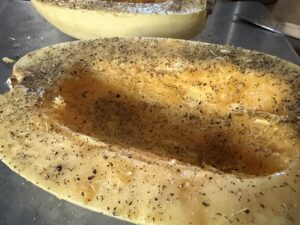
- Roast: Place halves cut-side down on a lined sheet pan. Roast 30-40 minutes.
- Check doneness: fork should go in easily, but squash should not collapse. Overcooking = mushy, watery strands.
- Shred: cool 5-10 minutes, then scrape with a fork to release strands.
- Dry the strands (important): put in a colander 5 minutes, then gently press with paper towels or spread on the sheet pan and bake 8-10 more minutes to evaporate moisture.
- Optional: Toss dried spaghetti squash noodles with 1 Tbsp butter
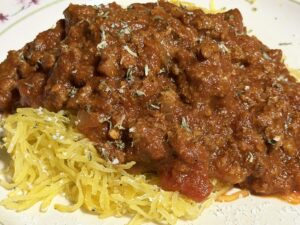
- Serve: Warm your spaghetti sauce separately and combine at the end. Do not simmer the squash in the sauce or it will turn watery and soft.
- Finish: Grate fresh parmesan over the top of sauce and noodles (best) or add parmesan from a shaker bottle (good).
Texture and flavor helpers (for squash lovers and squash skeptics)
- Keep it firm: pull it out of the oven a little early rather than late. You can always cook 3-5 more minutes if needed. Overcooking will lead to mushiness.
- Skillet option: after shredding, saute strands 3-5 minutes over medium-high to drive off moisture and add a little browning.
- Make it less "squashy": garlic + Italian seasoning, plus Parmesan (or a salty, savory topping) helps a lot.
- Assembly tip: toss strands with a little buttter/olive oil and a pinch of salt before saucing.
- Doneness cue: When you scrape, you want strands the separate cleanly and still have a little bite, not a soft pile that collapses.
Nutrition
Notes
9g net carbs per serving
